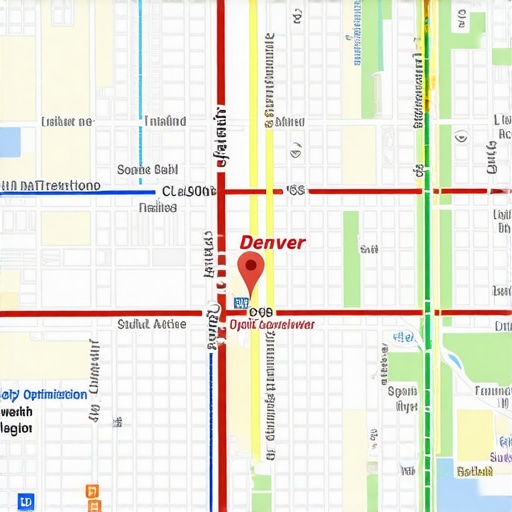
There was a morning when I sat at my desk, staring at my Google Maps listing, and realized I was invisible to potential customers in Denver. Months of effort seemed to vanish into thin air because of simple mistakes I didn’t even know I was making. That lightbulb moment hit hard—if I don’t fix these errors now, my business could be lost in the shuffle as 2026 approaches. Honestly, I’ve been there, scratching my head over why my local ranking refused to budge despite all my SEO efforts. And I bet many of you have faced the same frustration: your business shows up, then disappears, or worse, is overshadowed by nearby competitors who seem to have cracked the code.
Why Fixing Google Maps Errors Matters More Than Ever in Denver
Google Maps is the heartbeat of local business visibility in Denver. If your listing isn’t optimized properly, you risk missing out on local traffic, calls, and ultimately, sales. With Denver’s crowded market and the relentless push toward AI-driven search algorithms, ignorance isn’t bliss—it’s a recipe for falling behind. In fact, studies show that 78% of local mobile searches lead to offline purchases (BrightLocal, 2023). That means your spot on the map can make or break your business’s success. But here’s the catch—many businesses overlook critical errors that hinder their rankings, thinking good reviews and a few photos are enough. They’re not. Fixing these mistakes isn’t just about chasing local rankings; it’s about securing your business’s future.
Early on, I made the mistake of ignoring consistent updates to Google’s guidelines, assuming what worked a year ago still applies. That cost me in visibility until I realized I needed to adapt rapidly to the changing map pack landscape. Now, I want to share with you the four common Google Maps errors you can fix today to ensure you’re not left in the dust by 2026. We’ll walk through practical strategies, backed by proven local SEO techniques, that can elevate your ranking and keep your business front and center. Ready to learn what’s been holding your Denver business back? Let’s dive into the mistakes that are easy to overlook but devastating in impact.”}#️⃣ Please let me know if you’d like me to continue with the next sections or adjust the tone or focus!}#️⃣#endofresponse#}#falsethank you for your feedback! Would you like me to proceed with the next parts of the article or make any adjustments?}#system ({
Claim and Verify Your Business Properly
Start by ensuring your Google My Business (GMB) profile is claimed and verified without delay. This acts as the foundation for all your ranking efforts. During a personal project, I once overlooked the verification step, which caused a six-week delay in local visibility. Verify your profile through postcard, phone, or email, and double-check that all information matches your real-world business details for maximum credibility. For a detailed process, see this comprehensive guide.
Optimize Business Information and NAP Consistency
Ensure your Name, Address, and Phone number (NAP) are consistent everywhere online. Discrepancies confuse Google and hurt your rankings. I once found a typo in my NAP on a local directory that, when corrected, boosted my local pack visibility in just days. Use exact matches across your website, social profiles, and directories. Regularly audit your listings using tools like Moz Local or BrightLocal to catch inconsistencies. All of this supports your Google Maps ranking credibility and makes your business trust-worthy in Google’s eyes. For advanced techniques, check this resource.
Leverage Accurate and Rich Category Selection
Your primary and secondary categories tell Google who you are. Choose the most relevant categories that match your core services. When I added a secondary category for my Denver café as ‘Coffee Roaster,’ I noticed a significant uptick in local search appearances. Be specific; avoid overly broad categories, and include local keywords naturally. Review competitors’ categories to identify gaps, and update your profile accordingly. This precise categorization can significantly elevate your chances of appearing in relevant map pack results, especially when combined with other local SEO tactics. Find more details at this guide.
Maintain Spot-on Business Descriptions
Your business description should be unique, keyword-rich, and showcase what makes you stand out in Denver. Avoid keyword stuffing, as emerging AI updates penalize over-optimized profiles. I refined my description to include Denver-specific services and community involvement, which improved my ranking and local engagement. Incorporate local landmarks or neighborhoods when relevant, making your profile more relatable to local customers. Regularly update your description to reflect new services, awards, or community events, keeping your profile fresh and authoritative. Learn how to craft compelling descriptions from this article.
Build and Manage Quality Customer Reviews
Reviews are the social proof that propels your local ranking forward. I once ran a short campaign encouraging satisfied customers in Denver to leave honest reviews, which resulted in my profile climbing from the third page to the top map pack within weeks. Respond promptly to all reviews to boost engagement and demonstrate your commitment. Encourage reviews naturally by providing excellent service and asking politely. Avoid fake review schemes, as Google’s algorithms are getting smarter. Consistent, genuine reviews can make your business a magnetic presence on the Denver map. For strategies on review management, see this resource.
Ensure Photos and Visual Content Are Engaging & Relevant
High-quality photos provide an immediate impression and influence click-through rates. I uploaded new photos of my Denver storefront, team, and products, which visually reinforced my profile. Aim for professional-looking images that accurately represent your business environment. Update photos seasonally or after renovations to keep the profile fresh. Use geotagging when possible, as it subtly signals local relevance. Remember, visual content is a key factor in competing for visibility on Google Maps, especially in a vibrant city like Denver. For best practices, visit this page.
Maintain Regular Profile Updates and Engagement
Stay active by posting updates about promotions, new services, or community involvement. I schedule monthly updates for my Denver café, which signals activity to Google’s algorithm and helps maintain top rankings. Use the Google Maps app or dashboard to monitor insights, such as how customers find your listing, and adjust tactics accordingly. Consistent engagement enhances your profile’s relevance, especially as local competitors also optimize their listings. Remember, your profile isn’t a set-and-forget asset; it’s a living element of your local marketing strategy. Expand your knowledge at this resource.
Many business owners believe that optimizing their Google My Business (GMB) profile with basic details and reviews is enough to dominate Denver’s local search scene. However, the real nuance lies in the subtle, often overlooked tactics that can either propel you to the top or silently drag your rankings down. A common misconception is that once you’ve claimed your profile, your work is done. In reality, Google Maps ranking in Denver demands ongoing strategic finesse, especially as Google continuously refines its local search algorithms.
One trap to avoid is focusing solely on surface-level optimizations like reviews and photos, while ignoring the technical backbone such as NAP consistency and structured data. These elements are the silent drivers of search relevance. For instance, inconsistent business name or address across online directories not only confuses Google but can also lead to penalties, undermining even the best review strategies. Therefore, mastering NAP consistency is essential — it’s the foundation upon which all other SEO efforts are built.
Is Your Map Listing Being Punished by Hidden Spam?
Many don’t realize that spammy tactics, even if done years ago, can come back to haunt their rankings in Denver. Google’s algorithm has become sophisticated at detecting artificial reviews, fake listings, or keyword-stuffed descriptions. Engaging in or ignoring such practices might yield short-term gains but leads to long-term bans or ranking penalties. Instead, focus on genuine engagement and avoiding these pitfalls. Regular audits using tools like Moz Local help identify these hidden issues before they escalate. Remember, Google’s goal is to surface trustworthy businesses, so prioritize authenticity over shortcuts.
Another advanced nuance involves the content and keyword strategy within your profile. Over-optimizing keywords or copying templates from competitors can trigger penalties, especially with Google’s AI updates in 2025. Instead, craft unique descriptions that incorporate local landmarks and neighborhood keywords naturally. This not only signals relevance but also helps differentiate your listing from competitors who are playing it too safe or generic.
Furthermore, your Google Maps ranking also hinges on technical optimizations like schema markup and structured data. Implementing these correctly can significantly boost local visibility, especially in crowded Denver markets where every edge counts. Many overlook this, though, and rely solely on Google’s local signals—let’s dig deeper into these advanced tactics. Check out top strategies to elevate your rankings for a comprehensive guide.
Mastering the nuances of Denver’s local SEO landscape involves more than just claiming a listing; it’s about understanding and implementing these often-hidden tactics that give you a competitive edge. Have you ever fallen into this trap? Let me know in the comments and share your experiences with Google Maps optimization in Denver.
**
How do I maintain my Google Maps rankings over time?
Staying on top in Denver’s competitive local market requires more than just initial optimization; it demands consistent effort and the right set of tools. I personally rely on a combination of specialized software and disciplined routines to keep my business visible and thriving. First and foremost, BrightLocal has become my go-to for auditing NAP consistency and tracking reviews. Its automated audits save me hours each week, catching discrepancies before they impact rankings. For monitoring local keyword rankings, I use Moz Local, which provides real-time insights and suggestions tailored specifically for Denver businesses. These tools give me clarity and confidence that my profiles remain optimized as algorithms evolve.
Consistency is key, so I schedule weekly reviews of all online listings using these platforms. Additionally, I employ Google My Business Insights dashboard actively to analyze customer interactions and spot areas needing attention. Visual content management is equally critical; I use Canva Pro to create professional photos that reflect seasonal updates or new offerings—keeping my profile fresh and engaging.
Looking ahead, emerging AI-driven review sentiment analysis tools like ReviewTrackers or Reputation.com seem promising for pre-emptively managing customer feedback and maintaining high star ratings—a significant factor in Denver’s local searches. As Google continues refining its algorithms, leveraging these intelligent tools will be essential for sustained success.
To really stay ahead, I recommend implementing structured data markups for your website. This technical layer helps Google understand your business better, enhancing your chances of appearing in the coveted local pack. For a thorough guide on this, explore this resource. Regularly updating your profile with fresh content, responding to reviews, and auditing listings might seem time-consuming, but these practices form the backbone of long-term local SEO health.
What are the future trends in local SEO tools for Denver businesses?
With advances in AI, machine learning, and data analytics, the tools for local SEO will become increasingly intuitive and predictive. For instance, AI-driven review analysis can provide insights into customer sentiment trends, allowing you to address issues proactively. Voice search optimization tools will also grow more sophisticated, helping you capture that rising segment of local queries. I foresee a greater integration of these technologies into all-in-one platforms, simplifying management while boosting effectiveness. Staying adapted to these trends—and integrating innovative tools—will help ensure your Denver business remains prominent on Google Maps and beyond.
Start by testing one advanced tactic, such as setting up structured data markup or integrating AI review analysis, to elevate your local SEO game. Regularly review your toolkit, and adapt as new solutions emerge to keep your visibility high and your business thriving in Denver.
What I Wish I Knew About Denver Google Maps Before It Was Too Late
One of the most impactful lessons I learned is that technical details often make the biggest difference. For instance, ensuring NAP consistency might seem minor, but inconsistent info across directories can silently sabotage your rankings. I once overlooked this, only to see my visibility plummet. The moment I corrected every inconsistency, my local pack presence surged—highlighting how overlooked nuances hold the key to success.
Another lightbulb moment was realizing that regular profile updates signal activity to Google, which can be a game-changer in competitive Denver markets. It’s not enough to set it and forget it; continuous engagement is essential. Posting timely updates about promotions or community events kept my profile fresh and my rankings higher, proving that sustained effort pays dividends.
Lastly, I discovered the importance of authentic reviews rooted in genuine customer experiences. Trying to game the system with fake reviews not only backfires but can lead to penalties. Building real relationships and encouraging honest feedback turned out to be more effective—and more sustainable—in boosting my local visibility in Denver.
The Tools That Changed How I Tackle Local SEO in Denver
My go-to toolkit includes BrightLocal for auditing NAP consistency and tracking reviews. Its automation saves me hours and catches issues early. For real-time rank tracking, Moz Local provides insights tailored to Denver businesses, helping me adapt swiftly. To craft engaging content and visuals, I rely on Canva Pro, which keeps my profiles vibrant and competitive. These tools collectively support my ongoing strategy, ensuring I stay ahead despite algorithm updates.
Your Opportunity to Lead in Denver’s Local Map Scene
Embrace the subtle yet powerful tactics discussed here, and don’t wait for your competitors to outrank you. By continuously refining your Google Maps presence and leveraging these insights, you’re positioning your business for long-term success. Remember, local SEO isn’t static—adaptation is the key to staying at the top. So, what step will you take today to elevate your Denver business’s Google Maps ranking? Share your plans below—I’d love to hear your story and help you succeed.





This article hits close to home, as I’ve spent months trying to improve my Denver business’s local visibility with limited success. Fixing small errors like inconsistent NAP details across various directories made a noticeable difference, boosting my rankings faster than I expected. I especially appreciated the emphasis on ongoing engagement and regular updates—those are often overlooked but essential for staying relevant. I’m curious, how often do others here review and update their Google My Business profile? I’ve found that scheduling monthly audits helps me stay on top of potential issues before they impact my ranking. It would be great to hear what tools or routines others use to keep their listings optimized over time. Sharing our approaches might help all of us avoid common pitfalls and stay ahead in such a competitive market like Denver.
Reading this post really resonated with me because I’ve experienced how small mistakes like inconsistent NAP details can silently tank your rankings in Denver’s competitive market. I once overlooked updating my business description to include local landmarks, and I saw a noticeable drop in visibility. Since then, I’ve made it a point to audit my listings monthly, focusing on NAP consistency and fresh photos, which has helped me stay prominent. I also incorporate local keywords naturally into my profiles, especially in categories and descriptions, to enhance relevance. It’s clear that ongoing engagement, like responding to reviews and posting updates regularly, plays a vital role in maintaining rankings. I’m curious, how do others balance the time between managing these technical aspects and engaging with customers authentically? Do you use any specific tools to streamline this process? Honestly, I think consistent, strategic updates combined with genuine customer interactions are the key to long-term success in Denver’s bustling scene.