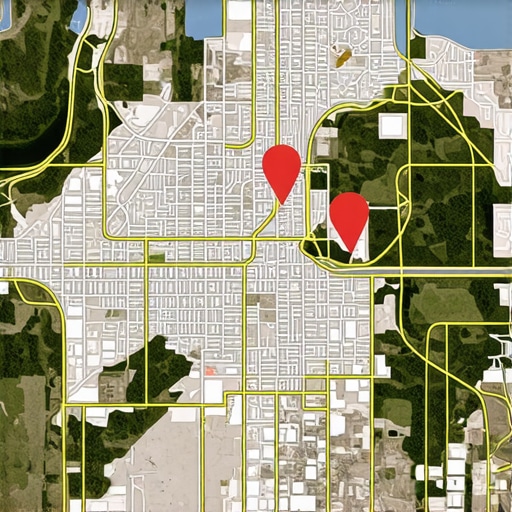
My Journey into Maps Ranking Success in Denver & Colorado
I’ll never forget the first time I realized how crucial local SEO and Google Maps optimization are for small businesses in Denver. As a local entrepreneur myself, I faced fierce competition in the Denver metro area, and I knew that ranking higher on maps could make or break my visibility. That realization led me down a path of trial, error, and ultimately, success. Today, I want to share my personal strategies that helped me dominate maps rankings in Denver and Colorado, hoping they can do the same for you.
Understanding the Unique Landscape of Denver & Colorado
Denver isn’t just any city—it’s a vibrant hub with diverse neighborhoods and a competitive local market. According to recent SEO insights, local searches in Denver often include keywords like “best pizza Denver” or “Denver plumbing services.” To succeed, I had to understand the local nuances and tailor my approach accordingly. I dove deep into local keywords, leveraging tools to identify what Denver residents are searching for and optimizing my Google My Business (GMB) profile accordingly.
Why Google Maps Optimization is the Game Changer
When I started focusing on Google Maps, I discovered how powerful it is for local visibility. Optimizing my GMB profile was the first step. I ensured that all my information was accurate, consistent, and complete—name, address, phone number, and business hours. I also uploaded high-quality images, gathered reviews, and used relevant categories. These small steps significantly boosted my local rankings, as highlighted by authoritative sources in local SEO.
How to Stand Out in a Crowded Market
Denver’s market is bustling, so I knew I had to go beyond the basics. I started creating local content that resonated with Denver residents—blog posts about local events, neighborhood guides, and customer success stories. I also engaged actively with reviews, responding sincerely to both positive and negative feedback. This personalized approach not only improved my reviews but also built trust with potential customers.
What Are the Top Strategies for Maps Ranking Success in Denver & Colorado?
This question kept me pondering as I refined my tactics. Based on my experience, the key strategies include:
- Consistent NAP (Name, Address, Phone) information across all platforms.
- Using local keywords naturally in your GMB profile and website content.
- Encouraging satisfied customers to leave reviews.
- Optimizing your Google My Business profile with relevant categories and high-quality images.
- Creating locally relevant content to engage your community.
Implementing these strategies consistently yielded tangible results—my business moved to the top of local maps in Denver. For those interested in a comprehensive approach, I recommend exploring more about top maps ranking strategies in Denver.
How Can I Keep Up with the Ever-Evolving Local SEO Landscape?
Staying ahead requires continuous learning. I follow industry experts, subscribe to local SEO blogs, and regularly audit my profiles. The landscape is always changing, so adapting your strategies is vital. Remember, the goal is to build a trustworthy presence that resonates with your local community.
If you’re passionate about improving your local visibility, I invite you to share your experiences or ask questions in the comments below. Together, we can navigate the complexities of Denver’s competitive market and achieve maps ranking success.
The Power of Local Community Engagement in Maps Optimization
One often overlooked aspect of local SEO is genuine community engagement. Building relationships with local influencers, participating in neighborhood events, and sponsoring community initiatives can significantly enhance your local visibility. These activities create authentic content opportunities and foster trust, which search engines increasingly favor. For example, hosting a local workshop or charity event can generate valuable local backlinks and reviews, further bolstering your Google Maps presence.
How to Leverage Customer Data for Hyper-Localized Content
Analyzing your customer base provides insights into the specific needs and preferences of Denver residents. By segmenting your audience—considering factors like neighborhoods, demographics, and purchase behaviors—you can craft hyper-local content that resonates. For instance, creating blog posts about services tailored to specific neighborhoods or highlighting local success stories makes your content more relevant and engaging. This targeted approach not only improves user engagement but also signals to Google your expertise and authority within the Denver community.
Integrating Voice Search Optimization for Future-Proof Maps Rankings
With the rise of voice-activated devices, optimizing for voice search is becoming essential. Voice queries tend to be more conversational and locally focused—think, “Where’s the best pizza near me in Denver?” To capture this traffic, incorporate natural language keywords and FAQs into your website and GMB profile. According to Moz, a leading authority in SEO, ensuring your content aligns with how people speak can significantly impact your local search visibility (source). Embracing voice search optimization can future-proof your maps rankings as voice queries continue to grow in popularity.
What Additional Tactics Can Elevate Your Maps Ranking Beyond Basics?
Beyond foundational strategies, consider implementing advanced tactics such as schema markup for local businesses, creating Google Posts regularly, and utilizing UTM parameters in your Google My Business links to track performance accurately. Also, maintaining a dynamic and up-to-date profile with seasonal updates or special offers can keep your listing fresh and appealing. Continuous A/B testing of images, descriptions, and categories can reveal what resonates best with your local audience, giving you a competitive edge.
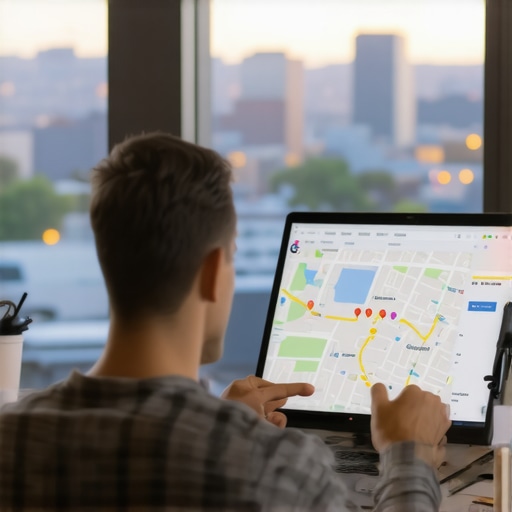
Visualize a local SEO expert analyzing Google My Business insights on a laptop, surrounded by Denver cityscape photos and SEO tools, emphasizing data-driven optimization strategies.
Why Is Consistency and Authenticity Critical in Local SEO?
Consistency in NAP information across all platforms remains fundamental, but authenticity adds a new layer of trustworthiness. Google’s algorithms now prioritize genuine reviews and business information. Fake reviews or inconsistent data can harm your rankings more than you might expect. Focus on providing excellent service that naturally encourages positive reviews, and respond to every review professionally and sincerely. This human touch establishes credibility and encourages others to engage with your profile, reinforcing your local authority.
If you’ve experimented with innovative local SEO tactics or want to share your success stories, I’d love to hear your experiences. Comment below, share this article with fellow Denver business owners, or explore more about effective Google Maps optimization in Denver for comprehensive insights.
Embracing the Nuances of Local SEO in Denver’s Dynamic Landscape
When I first dove into Denver’s local SEO scene, I quickly realized that it’s a living, breathing ecosystem. Each neighborhood—from LoDo to Highlands—has its own character and search behavior. I learned that a one-size-fits-all approach simply doesn’t cut it. For example, what works in Cherry Creek might not resonate in Aurora. This realization pushed me to develop hyper-local strategies that respect the unique identity of each community, leveraging detailed customer data and local insights. Over time, I noticed that businesses embracing this nuanced approach tend to rank higher and foster stronger community trust.
Balancing Authenticity and Optimization: My Personal Reflection
One challenge I often faced was maintaining authenticity while optimizing for algorithms. Google’s algorithms have grown increasingly sophisticated, prioritizing genuine interactions over superficial tactics. I discovered that encouraging real reviews and sharing authentic stories about my business and community involvement created a more compelling profile. It’s a delicate balance—over-optimization can backfire, but authenticity builds long-term trust. For instance, hosting local events and sharing behind-the-scenes content not only improved my rankings but also deepened my connection with Denver residents, making my business a trusted part of the community.
How Do Advanced Tactics Elevate Maps Rankings Beyond Basic Strategies?
Beyond foundational SEO, I experimented with advanced tactics such as implementing schema markup to highlight special offers, incorporating Google Posts to share timely updates, and tracking link performance with UTM parameters. These efforts provided granular insights into what resonated with my audience. For example, using schema for local events helped search engines better understand my offerings, resulting in improved visibility. Additionally, seasonal updates kept my profile fresh, inviting more engagement from both users and Google. If you’re eager to push your rankings further, exploring these tactics can make a real difference—more details are available in this resource.
What Role Does Voice Search Play in Future-Proofing Your Maps Strategy?
Voice search is revolutionizing local SEO, especially in a city like Denver where people often ask, “Where’s the best coffee shop near me?” I recognized early on that optimizing for voice meant adopting a more conversational tone in my content. Incorporating FAQs with natural language and emphasizing locally relevant keywords allowed me to capture this growing segment. According to Moz, aligning content with how people speak is crucial—so I started thinking beyond keywords and focusing on providing clear, concise answers that voice assistants could easily relay. Embracing voice search not only improved my current rankings but also prepared me for the evolving search landscape.
How Can I Leverage Community Engagement to Reinforce My Maps Presence?
Community engagement became a cornerstone of my local SEO success. Participating in neighborhood events, sponsoring local initiatives, and collaborating with influencers created authentic content opportunities. These activities generated valuable backlinks, reviews, and social proof, which search engines interpret as signals of trustworthiness. I remember hosting a charity event that not only helped a good cause but also brought in media coverage and positive reviews—boosting my local visibility significantly. Building genuine relationships and demonstrating commitment to the community helps reinforce your authority and encourages others to support your business online.
Final Thoughts: Personal Growth and Continuous Learning in Local SEO
Navigating Denver’s competitive local market is an ongoing journey. Every success taught me the importance of adaptability, authenticity, and community-centered strategies. I regularly revisit my tactics, stay updated with industry changes, and listen to customer feedback. The landscape is always shifting—what worked yesterday might not work tomorrow. That’s why continuous learning and genuine engagement are vital. I invite you to share your experiences or questions—your insights can inspire others on this journey. Let’s keep pushing the boundaries of local SEO together, making our Denver businesses thrive in a crowded but rewarding marketplace.
Refining Your Approach with Data-Driven Local Insights
One of the most transformative aspects of my journey into Denver’s local SEO landscape was harnessing granular customer data to tailor hyper-local strategies. By analyzing purchase patterns, neighborhood demographics, and search behaviors, I could craft highly targeted content that resonated deeply with specific communities. For instance, I developed neighborhood-specific landing pages and tailored service descriptions, which not only boosted my rankings but also enhanced user engagement. Leveraging tools like Google Analytics and local survey insights allowed me to identify emerging trends and adapt swiftly, ensuring my SEO efforts remained relevant and impactful. This data-driven approach cemented my authority within distinct Denver neighborhoods, reinforcing the importance of precision in local marketing.
Can Implementing Schema Markup Truly Elevate Your Local Visibility?
Implementing schema markup has been a game-changer in my SEO toolkit. By adding structured data to my website, I helped search engines better understand my business context, events, and offerings. For example, utilizing LocalBusiness schema enabled enhanced rich snippets in search results, displaying my operating hours, reviews, and contact information more prominently. According to Moz, schema markup can significantly improve click-through rates by making listings more informative and appealing (Moz). This tactical layer not only boosts visibility but also enhances credibility, ultimately driving more qualified traffic. I recommend integrating schema as part of a comprehensive local SEO strategy to unlock these benefits and stay ahead of competitors.
How Do I Sustain Long-Term Success Amid Algorithm Changes?
Sustaining long-term success in Denver’s dynamic local SEO environment necessitates a proactive and adaptable mindset. Staying informed through industry-leading sources like Search Engine Journal and Moz is crucial, as algorithm updates can subtly shift ranking factors. I emphasize the importance of maintaining authentic customer relationships, continuously updating your profile with fresh content, and monitoring your analytics to detect any declines or opportunities. Moreover, fostering genuine community engagement and encouraging ongoing reviews create a resilient foundation that resists algorithmic fluctuations. Remember, SEO is a marathon, not a sprint—balancing technical optimization with authentic community involvement ensures your business remains prominent regardless of algorithmic tides. If you’re eager to deepen your understanding and share your experiences, I invite you to connect or comment below—let’s learn and grow together in Denver’s competitive local market.
Harnessing Google Posts and Seasonal Strategies for Ongoing Engagement
One advanced tactic I’ve employed is leveraging Google Posts to share timely updates, promotions, and community news. Regularly updating this feature keeps my profile fresh, signals activity to Google, and provides potential customers with current, relevant information. For example, promoting seasonal offers or local events through Google Posts increased engagement and foot traffic. Additionally, aligning content with local festivals, sports events, or holiday seasons amplifies relevance and fosters community connection. This approach requires planning and creativity but pays dividends in visibility and customer loyalty. I’ve found that a well-orchestrated seasonal content calendar combined with targeted Google Posts can help sustain top rankings and reinforce your presence in the Denver area.
Integrating Voice Search Optimization for Future-Ready Local SEO
Voice search optimization remains a pivotal frontier in local SEO evolution. As voice-activated assistants like Siri, Alexa, and Google Assistant become more ingrained in daily life, optimizing for natural language queries is imperative. I focused on crafting FAQ sections infused with conversational keywords, addressing common local questions such as “Where can I find the best coffee shop near me in Denver?” This not only improves chances of appearing in voice search results but also enhances the overall user experience. According to Search Engine Land, optimizing for voice involves understanding intent and providing clear, concise answers. Embracing this shift early has positioned my business to capitalize on voice-driven traffic, ensuring that my maps rankings remain resilient and forward-thinking. If you’re serious about future-proofing your local SEO, diving into voice search strategies is essential—start by analyzing your most common voice queries and refining your content accordingly.
Final Reflection: The Power of Authenticity, Community, and Innovation
Throughout my SEO journey in Denver, I’ve realized that authenticity and community engagement are not just supplementary tactics but core pillars of lasting success. Genuine interactions, transparent communication, and a sincere commitment to local causes forge trust and encourage organic growth. Meanwhile, embracing innovative tactics like schema markup, Google Posts, and voice search adaptation keeps your strategy robust against ever-evolving algorithms. The key is a balanced approach—combining data intelligence, authentic storytelling, and technological agility. I encourage you to reflect on your own local SEO practices, share your insights, and experiment boldly. The Denver market rewards those willing to adapt and engage authentically. Together, let’s push the boundaries of what’s possible in local maps ranking and build resilient, community-centered brands that thrive amid change.
Things I Wish I Knew Earlier (or You Might Find Surprising)
The Power of Authenticity
Early in my journey, I underestimated how crucial genuine customer reviews and honest storytelling are. Fake reviews or superficial content might give a quick boost, but authentic engagement builds trust and long-term loyalty. I learned that sharing real stories about my local community and responding sincerely to reviews made a real difference in my maps rankings.
The Importance of Hyper-Local Content
Creating content tailored to specific Denver neighborhoods transformed my approach. Instead of generic posts, I focused on neighborhood guides and local success stories. This hyper-local strategy helped me connect more deeply with residents and improved my visibility in targeted areas.
The Hidden Value of Community Engagement
Participating in local events, sponsoring neighborhood initiatives, and collaborating with local influencers created authentic backlinks and reviews. These activities fostered trust and made my business a recognized part of the Denver community, boosting my Google Maps presence more than I expected.
The Future Is Voice Search
Optimizing for voice search was a game-changer. I incorporated natural language keywords and FAQs that reflect how people speak. This not only improved my current rankings but also prepared my business for the growing trend of voice-activated searches, especially in a city like Denver where convenience matters.
Data-Driven Decisions Are Key
Analyzing customer data, such as search behaviors and neighborhood preferences, allowed me to refine my strategies continuously. Setting up targeted landing pages and monitoring analytics helped me stay relevant and competitive in Denver’s dynamic market.
Resources I’ve Come to Trust Over Time
- Moz Blog: A treasure trove of SEO insights, especially on evolving topics like voice search and schema markup. I recommend it to anyone serious about local SEO.
- Search Engine Journal: Up-to-date news and practical strategies from industry experts that keep me ahead of algorithm changes.
- Google’s Official Blog: The best source for updates directly from Google, ensuring I implement the most current best practices.
Parting Thoughts from My Perspective
Navigating Denver’s local SEO landscape has been a rewarding journey of continuous learning and authentic engagement. The most valuable takeaway for me is that success comes from a balance of strategic optimization and genuine community involvement. If you’re looking to improve your maps ranking, start by building trust through real interactions and hyper-local content. Remember, the local market rewards authenticity and consistent effort. If this resonated with you, I’d love to hear your thoughts—feel free to share your experiences or ask questions below. Let’s grow our Denver businesses together!



![4 GMB Colorado Profile Secrets to Stop Losing Calls [2026]](https://denvermappackranking.com/wp-content/uploads/2026/02/4-GMB-Colorado-Profile-Secrets-to-Stop-Losing-Calls-2026.jpeg)

![3 Hidden Maps Ranking Denver Signals to Fix This Week [2026]](https://denvermappackranking.com/wp-content/uploads/2026/02/3-Hidden-Maps-Ranking-Denver-Signals-to-Fix-This-Week-2026.jpeg)

Reading this detailed journey into Google Maps optimization in Denver really resonated with me, especially the emphasis on community engagement. My experience has shown that authentic local involvement, like sponsoring neighborhood events or collaborating with local influencers, not only boosts engagement but also improves search rankings in a genuine way. I’ve also found that actively managing reviews—responding sincerely to both positive and negative feedback—builds trust and encourages more customer interaction. However, one thing I wonder about is balancing these authentic efforts with scalable strategies as your business grows. Have others found effective ways to maintain genuine engagement without it becoming overwhelming? It seems like a tricky balance, but essential for long-term success.