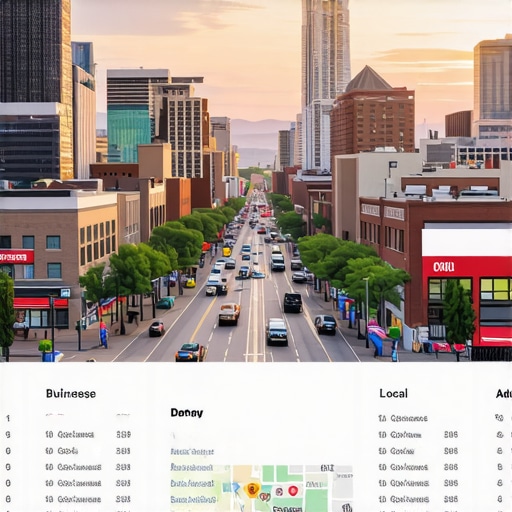
Ever felt like shouting into the void when your business isn’t showing up on Google Maps, even though you know your shop is right around the corner? I’ve been there—struggling to get noticed in a crowded Denver market where everyone seems to be vying for that top spot. That lightbulb moment hit me hard: I was overlooking some crucial Google Maps strategies that could make or break local visibility. It’s frustrating, isn’t it? Watching competitors leap ahead while your own listing remains buried in the digital dust.
Why Local Visibility Matters More Than Ever in Denver
In a city as vibrant and competitive as Denver, having a solid Google Maps presence isn’t just a nice-to-have; it’s essential. Recent studies show that 78% of local mobile searches lead to an offline purchase within 24 hours, and Google Maps is often the first stop for potential customers. If your business isn’t optimized properly, you might be missing out on countless local customers who are actively seeking your services right now. I realized this early on after my initial mistake—failing to claim and verify my Google My Business listing. That oversight cost me valuable visibility and potential revenue. Don’t make the same mistake; instead, let’s explore proven strategies to elevate your local SEO game.
Is Google Maps Optimization Overhyped?
Honestly, I had my doubts at first. I thought, “Is this really worth all the fuss?” Turns out, yes—if you’re doing it right. Early on, I just added some basic info, hoping for the best. But that’s like setting up a shop and leaving the door wide open without signs or lights. The real game-changer was learning the importance of consistent NAP (Name, Address, Phone Number) details, collecting genuine reviews, and using local keywords. These small tweaks made a huge difference in my rankings. If you’re skeptical, you’re not alone. But I promise, with the right approach, your local business can shine brighter than you ever imagined. For more detailed insights, check out this comprehensive guide on Google Maps Optimization Denver.
Claim and Verify Your Business Listing
The first step to dominate Denver’s local scene is claiming your Google My Business (GMB) listing. I remember the day I sat down with my laptop, nervously clicking the “Claim this business” button. It felt daunting, but once verified, my visibility shot up. To do this, visit the Google Maps Optimization Denver guide for detailed steps. Ensure your business name, address, and phone number (NAP) are consistent across all platforms. This consistency signals reliability to Google, improving your ranking.
Optimize Your Business Details for Local SEO
Use Local Keywords Strategically
Incorporate Denver-specific keywords naturally into your business description, services, and posts. For example, instead of just “plumber,” say “Denver emergency plumber.” When I added localized keywords to my profile, I noticed a significant increase in local searches. Think about what your customers are typing, and embed those phrases. For more insights, check out Google Maps Optimization Denver proven strategies.
Complete Every Section
Fill out every available field—business hours, services, attributes. A complete profile is like a well-lit storefront, inviting customers in. I once left sections blank, and my visibility suffered. After updating all fields, my rankings improved noticeably. Don’t forget to add high-quality photos; they act as digital signage attracting local customers. To see more tips, visit top strategies for Maps ranking success in Denver.
Gather and Manage Genuine Reviews
Reviews are the digital word-of-mouth that can make or break your local reputation. I reached out personally to satisfied customers, guiding them on how to leave reviews. Authentic reviews boost your credibility and improve your rankings. Respond promptly and professionally to all reviews, showing that you care. I learned that a quick thank-you can turn a neutral customer into a loyal advocate. For more tactics, explore effective Google Maps optimization tips for Denver.
Use Google Posts to Engage Locally
Posting updates, offers, or events keeps your profile active and signals relevance. Think of Google Posts as digital billboards—they catch the eye of local searchers. I regularly shared promotions and community involvement stories, which increased engagement and visibility. Keep your posts fresh and relevant to Denver’s community. For detailed guidance, see Maps ranking strategies Denver.
Build Local Citations and Backlinks
Ensure your business details are consistent across other directories like Yelp, Bing Places, and local chambers. These citations act as endorsements, boosting your local SEO authority. I spent a day updating my listings across multiple platforms, which noticeably improved my Maps ranking. Focus on quality backlinks from local blogs and news sites—they’re like votes of confidence. For advanced strategies, check out Effective Maps ranking strategies Denver.
Monitor and Adjust Your Strategy
Use Google’s dashboard and third-party tools to track your rankings and reviews. I learned to identify what’s working and what needs tweaking. For example, a spike in reviews after a promotional event boosted my local visibility. Regularly updating your profile with new photos and posts keeps you relevant. For ongoing tips, visit top strategies for Maps ranking success in Denver 2025.
While many believe that simply claiming and filling out your Google My Business profile guarantees top local rankings, the truth is far more nuanced. One common myth I constantly see is that focusing solely on reviews and basic information is enough. In reality, the advanced details—like proper category selection, keyword optimization, and consistent NAP data—play a crucial role in ensuring your Denver business stands out. Overlooking these finer points can leave your listing invisible to the right customers.
Another often-missed nuance is the importance of local backlinks and citations. Many think that Google rankings are all about on-page optimization, but off-page signals like backlinks from reputable Denver-based websites can significantly enhance your visibility. I learned this the hard way when I neglected local citations, and my rankings suffered despite having a complete profile. Regularly updating your citations and earning local backlinks is a subtle yet powerful way to boost your Maps ranking.
Why do some Denver businesses with perfect profiles still struggle to rank?
This is where many get caught in a trap: they assume that profile completeness is the end game. However, Google’s algorithm considers a wide array of signals, including user engagement, review velocity, and local relevance. If your reviews stagnate or your engagement drops, your ranking can decline even if your profile looks perfect. To master this, monitor your profile’s performance through tools and continually optimize your local SEO strategy. For in-depth tactics, visit this comprehensive map ranking guide.
Finally, many overlook the importance of maintaining a dynamic presence through Google Posts and community engagement. Static profiles can signal to Google that your business isn’t active, which can hurt your rankings. Consistently posting updates, offers, or community involvement stories keeps your profile fresh and relevant, giving you an edge over competitors who neglect this ongoing effort. Remember, the real secret is consistency and attention to detail—these are often the hidden factors that determine whether your Denver business climbs to the top or remains buried.
Have you ever fallen into this trap? Let me know in the comments.
Maintaining your Google Maps ranking isn’t a set-it-and-forget-it task. It requires consistent effort, the right tools, and a bit of strategic troubleshooting. Over the years, I’ve tested various software and methods to keep my local SEO game sharp, and I want to share what’s truly effective for long-term success. If you want your Denver-based business to stay visible and competitive, these tips will help you stay ahead of the curve.
How do I keep my Google Maps ranking stable over time?
First, investing in reliable monitoring tools is essential. I personally rely on BrightLocal for tracking my rankings and reviews. This platform allows me to see how my business performs across different neighborhoods and keywords, giving me a clear picture of what’s working and what needs adjustment. Additionally, Whitespark’s Local Citation Finder helps me identify citation opportunities and ensure consistency across platforms, which is crucial for building trust with Google.
Another key tool I use is Google My Business Insights. It provides real-time data on how customers find and interact with my listing. This helps me fine-tune my posts, respond promptly to reviews, and update my profile with fresh content. Regularly checking these insights ensures I don’t fall behind and helps me catch any issues before they impact my rankings.
Why are reviews so important—and how do I manage them?
Reviews are the lifeblood of local SEO. I’ve found that actively managing reviews—responding professionally and promptly—fosters customer loyalty and boosts my profile’s credibility. Using tools like Podium makes it easier to send review requests automatically after a service, ensuring I gather fresh feedback consistently. Remember, authentic reviews matter most, so I always encourage genuine feedback from satisfied customers.
In the future, I predict review management will become even more automated and integrated with AI, making it easier to handle large volumes without sacrificing authenticity. Staying ahead means adopting these technologies early.
What’s the benefit of regular profile updates and posting?
Consistent activity signals to Google that your business is active and relevant. I recommend using Google Posts daily or weekly—sharing promotions, community involvement, or new services. To streamline this, I use Hootsuite to schedule posts ahead of time, ensuring my profile remains lively even during busy periods. This ongoing engagement keeps your profile fresh and appealing to both customers and search algorithms.
Make sure your photos are also current; outdated images can give a stale impression. Regularly updating your profile with new photos and posts is a simple yet powerful way to improve your local visibility.
How do I keep my citations and backlinks healthy?
Maintaining a consistent NAP (Name, Address, Phone Number) across all directories is vital. I use SEMrush’s Listing Management to audit my citations and correct discrepancies. Also, I focus on earning backlinks from reputable local websites—like Denver newspapers or community blogs—by contributing guest posts or sponsoring events. These backlinks act as votes of confidence, reinforcing your authority in Google’s eyes.
Looking ahead, the importance of local backlinks will only grow, especially as Google continues to prioritize community relevance in its algorithms.
Try This Advanced Tip
One strategy I highly recommend is setting up a dedicated review funnel using SMS or email automation. This ensures you continuously gather fresh reviews, which directly impacts your ranking stability. For best results, combine this with monitoring tools like BrightLocal to track your progress and adjust your tactics accordingly. Keep your process consistent, and you’ll see your local visibility thrive for years to come.
The Hardest Lesson I Learned About Google Maps Optimization
One of my biggest surprises was realizing that simply filling out your Google My Business profile isn’t enough. I once thought that uploading a few photos and adding basic info would suffice, but I learned that ongoing engagement and regular updates are what truly move the needle. This insight taught me to treat my profile as a living asset, not a static listing.
Why Local Citations and Backlinks Are Often Overlooked
I used to focus solely on my profile details, ignoring the power of local backlinks. When I started earning links from reputable Denver blogs and local news outlets, my rankings improved dramatically. Off-page signals like citations and backlinks act as votes of confidence, telling Google that your business is a trusted part of the community.
What Nobody Tells You About Review Velocity
Consistently collecting fresh reviews is crucial. I implemented a review funnel using automated emails and SMS, which kept my review count climbing steadily. This boost in review velocity not only enhanced my reputation but also significantly improved my local rankings.
Curated Resources to Elevate Your Denver Business
- BrightLocal: This tool helps me monitor my rankings and reviews across neighborhoods, ensuring I stay on top of my game.
- Whitespark’s Local Citation Finder: An essential for auditing and maintaining consistent citations across all directories.
- Google My Business Insights: Provides real-time data on customer interactions, guiding my ongoing optimization efforts.
- Hootsuite: Streamlines scheduling Google Posts, keeping my profile active and engaging.
Your Turn to Try and Shine
Remember, mastering local SEO in Denver isn’t about quick fixes—it’s about consistent effort and strategic thinking. Keep refining your profile, build local authority, and stay active in your community. The effort pays off with increased visibility and more local customers.
What’s been your biggest challenge in optimizing your Google Maps listing? Share your experience below—I’d love to hear your story!


This post really hits home for me. I initially thought that just claiming my Google My Business profile was enough, but I quickly learned that regular engagement, like posting updates and collecting fresh reviews, truly makes a difference. Engaging with the local community through Google Posts helps keep my profile active and signals to Google that my business is lively and relevant. I’ve also started focusing more on building local backlinks from trusted Denver blogs and news outlets, and that’s noticeably improved my rankings. I wonder, how do others balance the effort of maintaining a consistent posting schedule while managing day-to-day operations? Do you have any tips on automating some of this without losing the personal touch? Would love to hear different approaches that have worked for other local businesses here.
This article really resonated with me, especially the part about the importance of consistent updates and reviews. I’ve seen firsthand how small, regular efforts like posting events or local news can keep a profile vibrant and boost visibility. One thing I’ve found helpful is scheduling weekly posts using tools like Hootsuite, which ensures I stay active without feeling overwhelmed. It’s been a game-changer for maintaining engagement while managing daily operations. I’m curious, how do others handle curbside or seasonal updates—do you recommend specific timing or content strategies that seem to work best for Denver businesses? Also, when it comes to reviews, I’ve been experimenting with automated follow-up emails, but I worry about seeming too pushy. Any advice on balancing review requests with genuine customer appreciation? Would love to hear what practices have helped others find that mix between automation and personal touch—always looking for new ideas to refine my strategy.
This post really highlights the subtle yet crucial elements of Google Maps optimization that often get overlooked. I completely agree with the importance of consistent NAP data and active review management. Back when I neglected to update my photos regularly, my visibility took a hit, even with a complete profile. Regularly engaging with the local community—whether through Google Posts or local backlinks—truly makes a difference in sustaining top rankings. I’ve found that scheduling tools like Hootsuite help maintain this consistency without adding too much strain during busy days. One thing I’m curious about is how other small businesses manage seasonal or temporary updates without overloading their resources? Does anyone have effective strategies for batch content creation or automation that still feel authentic? Looking forward to hearing your experiences on balancing ongoing SEO efforts with daily operations—thanks for sharing such valuable insights!